Discover Tbilisi — Georgia's 1,500-year-old capital where sulfur baths, Old Town cobblestones, Narikala Fortress, Rustaveli Avenue and polyphonic culture create an unforgettable city break.
Tbilisi: The City That Loves You
One of Europe's oldest capitals, Tbilisi has served as the cultural, political and economic heart of Georgia for fifteen centuries. The city's name derives from the Georgian word "tpili," meaning warm — a reference to the naturally hot sulfur springs that legend says convinced King Vakhtang Gorgasali to found the city here in the 5th century AD. Today, Tbilisi is a mesmerising blend of ancient and modern, where cobblestone lanes and medieval churches sit alongside striking contemporary architecture and a dynamic culinary scene.
What makes Tbilisi truly special is its polyphonic character. Like the famous Georgian polyphonic singing, the city is a harmony of contrasting elements — East and West, old and new, sacred and secular. Wandering its streets, you will encounter Georgian Orthodox churches, Armenian churches, Catholic churches, a mosque and two synagogues, all within a few blocks of each other. This remarkable religious diversity is a testament to Tbilisi's centuries-old role as a crossroads of civilisations.
Top Things to Do in Tbilisi
1. Explore Old Tbilisi & Abanotubani Sulfur Baths
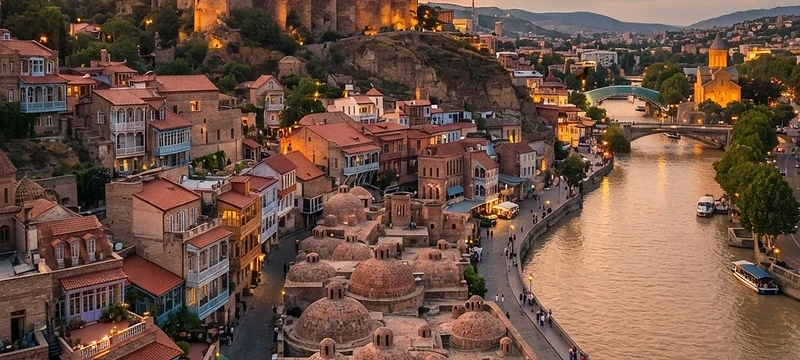
The historic heart of the city, Old Tbilisi, spans roughly two square kilometres and houses the capital's most iconic sights. The main attraction is the colourful domed 17th-century sulfur bath complex in Abanotubani. Fed by naturally hot mineral water, these baths have been the social and therapeutic centre of Tbilisi for centuries. Book a private room, soak in the healing waters, and experience the same warmth that inspired a king to build a city.
2. Ride the Funicular to Mtatsminda Park
For the best panoramic views of Tbilisi, take the historic funicular up to Mtatsminda Park — the highest point in the city. Amidst the greenery you will find restaurants, cafes, amusement rides and secluded corners perfect for relaxation. The funicular itself is a beloved Tbilisi institution, connecting the mountain to the city since 1905.
3. Visit Metekhi Temple & Narikala Fortress
The noble Metekhi Temple sits on a cliff high above the Mtkvari River, with a statue of King Vakhtang Gorgasali in its courtyard. From here, the view of Old Tbilisi is breathtaking. Across the river looms Narikala Fortress, a 4th-century citadel that can be reached by cable car. The fortress walls offer sweeping views over the old town, the modern Bridge of Peace and the surrounding mountains.
4. Walk Rustaveli Avenue
Tbilisi's main thoroughfare stretches 1.5 kilometres and is lined with historic buildings: the Parliament of Georgia, the Opera and Ballet Theatre, the National Gallery, Rustaveli Theatre, the Modern Art Museum and Kashveti Church. Tree-lined squares, cafes and shops make it perfect for a leisurely stroll. An architectural tour of Rustaveli reveals the Tbilisi Modern style — buildings with ornate facades and painted entrance halls, each telling its own emotional story.
5. Discover Sameba Cathedral & Kartlis Deda
The Holy Trinity Sameba Cathedral is one of the largest Orthodox churches in the world and a dominant feature of Tbilisi's skyline. Nearby stands the monumental Kartlis Deda (Mother of Georgia) statue, holding a sword for enemies and a bowl of wine for friends — a perfect symbol of Georgian hospitality. Both sites offer spectacular views and deep cultural insight.
6. Wander Shardeni Street & Gabriadze Clock Tower
Shardeni Street is Old Tbilisi's liveliest lane, packed with restaurants, cafes, bars and art galleries. Just around the corner, in the square outside Gabriadze's Marionette Theatre, you will find the enchanting Gabriadze Clock Tower. Twice daily at 12:00 and 19:00, a delightful puppet show called The Circle of Life performs — a magical moment that captures Tbilisi's whimsical spirit.
7. Experience a Georgian Supra
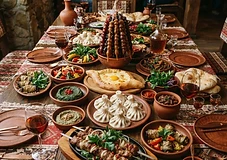
No visit to Tbilisi is complete without attending a supra — the traditional Georgian feast. Led by a tamada (toastmaster), a supra is a generous communal meal and an ancient ritual of sharing. You will taste khachapuri, khinkali, mtsvadi and other Georgian specialities, accompanied by world-famous Georgian wine. The supra is inscribed on UNESCO's Intangible Cultural Heritage List and is the best way to understand Georgian culture.
Tbilisi Travel Tips
- Currency: Georgian Lari (GEL). ATMs are widely available.
- Language: Georgian. English is increasingly spoken, especially by younger people.
- Getting around: Tbilisi Metro is clean and cheap. Bolt and Yandex taxis are affordable.
- Visa: Most nationalities can visit Georgia visa-free for up to 1 year.
- Best time: Spring (May–June) and autumn (September–October) offer ideal weather. Summer can be hot; winter is mild but cosy.
Plan Your Tbilisi Journey with Book Tour 4 U
Our Georgia specialists craft personalised Tbilisi itineraries — from Old Town walking tours and sulfur bath experiences to wine tastings and multi-day Caucasus adventures. Let us handle the details while you fall in love with Tbilisi.