Qatar
A compact Gulf state of dazzling skylines, desert dunes, and pearl-diving heritage.
Overview
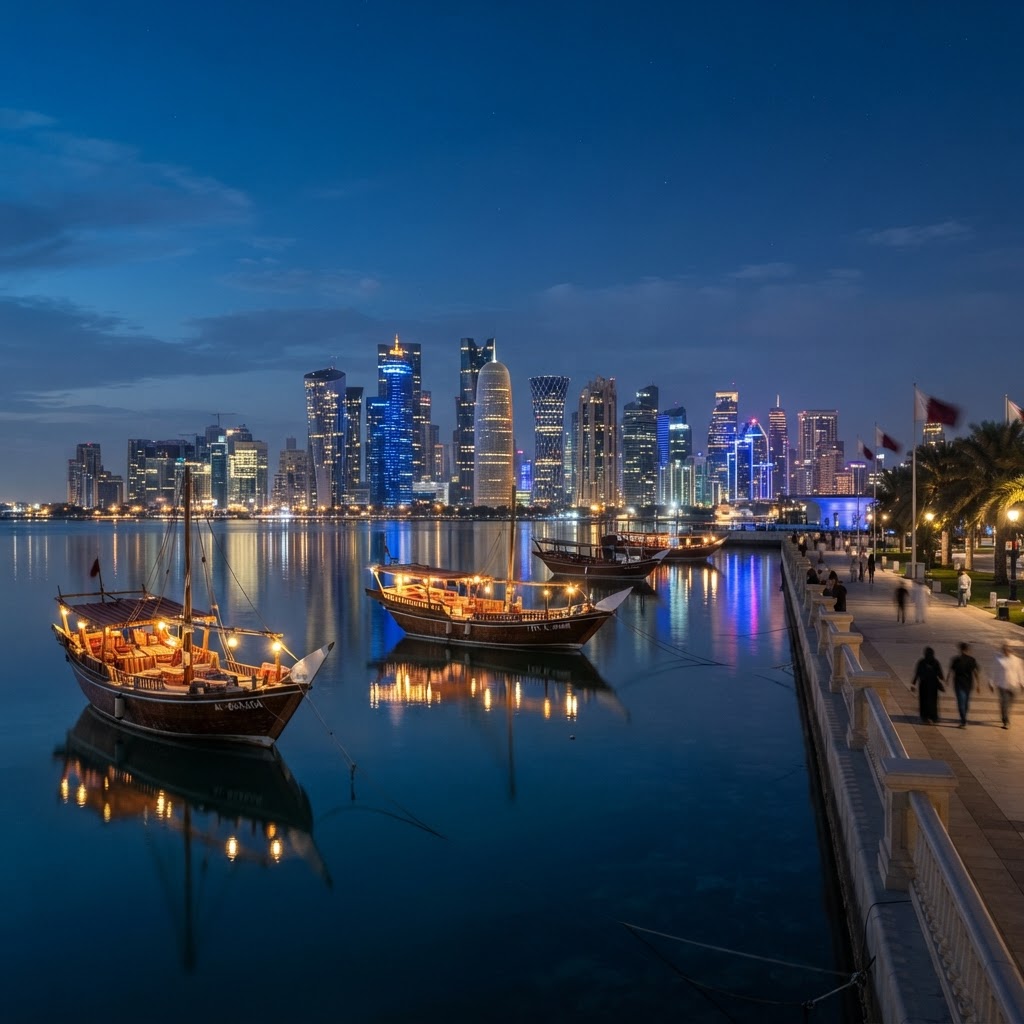
Qatar is a peninsula jutting into the Persian Gulf — a small, wealthy nation that has transformed itself into a global hub of art, sport, and culture. Doha's West Bay sparkles with glass towers beside the traditional dhow harbor and the labyrinthine Souq Waqif. Beyond the capital lie the golden dunes of Khor Al Adaid (the Inland Sea), the heritage fishing town of Al Wakrah, and the futuristic stadium city of Lusail. With world-class museums, desert adventures, and refined Gulf hospitality, Qatar blends the deeply traditional with the cutting-edge.
Top Attractions
- Doha
- Al Wakrah
- Lusail
Explore on the Map
Key locations and points of interest to help you visualize your journey.


Travel Information
Visa-free or visa-on-arrival for most nationalities; others can apply for an e-visa (Hayya portal). Best time to visit: November–March. Currency: Qatari Riyal (QAR). Arabic is official; English is universally spoken. Dress modestly in public. Alcohol is restricted to licensed hotel venues.
Travel Guide
Best Time to Visit
The best time to visit Qatar is between November and April, when temperatures are mild and pleasant, making it ideal for outdoor exploration. The peak season runs from November to March, offering comfortable weather for sightseeing, desert adventures, and cultural festivals like the Ajyal Film Festival and Qatar National Day in December. While summer (June to September) is sweltering with temperatures often exceeding 40°C, it is the best time for budget travelers to find hotel deals. February and March are particularly vibrant, hosting major sporting events and the Qatar International Food Festival. Visitors should plan for the high season by booking accommodations in advance, as this is when the country is most active and the weather is most conducive to enjoying Doha’s Corniche, outdoor markets, and cultural landmarks.
Getting There
Getting to Qatar is seamless, primarily through Hamad International Airport (DOH) in Doha, which serves as a major global aviation hub. Qatar Airways, the national carrier, provides extensive direct flight connections to hundreds of destinations worldwide. Many international airlines also operate frequent flights to Doha. For travelers arriving from neighboring Gulf countries, there are overland border options, though air travel remains the most efficient and common method for international visitors. Upon arrival, the airport offers world-class facilities and easy access to the city center via the Doha Metro or taxi services. Visitors should check their visa requirements in advance, as many nationalities are eligible for visa-free entry or can easily obtain an e-visa through the official government portal before departure.
Getting Around
Navigating Qatar is convenient and efficient, thanks to significant infrastructure investments. The Doha Metro is a world-class, clean, and affordable way to travel between major tourist sites, the airport, and residential areas. For more personalized travel, ride-hailing apps like Uber and Careem are widely available and reliable. Taxis are also plentiful and easily hailed in urban areas. While walking is feasible in specific districts like Souq Waqif or Msheireb Downtown during cooler months, the city is largely designed for vehicles due to the heat. Car rentals are a popular option for those planning to explore the desert or travel outside of Doha. Dhow boats offer a traditional and scenic way to traverse the waters along the Corniche, providing a unique perspective of the city skyline.
Weather & Climate
Qatar features a desert climate characterized by long, hot summers and mild, pleasant winters. From June to September, temperatures frequently soar above 40°C (104°F), often reaching 50°C in the shade, necessitating lightweight, breathable clothing and a focus on indoor activities. The winter season, from November to April, is the most comfortable, with average temperatures ranging from 15°C to 25°C. During these months, visitors should pack layers, as evenings can feel surprisingly cool compared to the sunny days. Regardless of the season, high-quality sunglasses, sunscreen, and a hat are essential. While rain is rare, it can occur in short bursts during the winter. Modest clothing is recommended year-round to respect local customs, particularly when visiting public spaces or religious sites.
Currency & Costs
The local currency is the Qatari Riyal (QAR), which is pegged to the US Dollar at a rate of approximately 3.64 QAR per 1 USD. Currency exchange services are readily available at the airport, banks, and major shopping malls. ATMs are ubiquitous throughout Doha and other urban centers, and credit cards are widely accepted in hotels, restaurants, and retail stores. While a daily budget can vary significantly based on travel style, budget-conscious travelers might spend around $80 per day, while mid-range travelers should expect to spend closer to $180. Fine dining and luxury experiences can push daily costs much higher. It is advisable to carry some cash for smaller purchases in traditional markets like Souq Waqif, where card acceptance may be less consistent than in modern malls.
Language
The official language of Qatar is Arabic, which is used in all government and official communications. However, English is the primary language of business and is widely spoken and understood by the vast majority of the population, including service staff, taxi drivers, and retail employees. Travelers will find it very easy to navigate the country using English alone. While not required, learning a few basic Arabic phrases such as 'As-salamu alaykum' (peace be upon you) or 'Shukran' (thank you) is greatly appreciated by locals and can help foster positive interactions. Most signage, menus, and public information are provided in both Arabic and English, ensuring a smooth experience for international visitors throughout their stay.
Safety Tips
Qatar is consistently ranked as one of the safest countries in the world, with very low rates of violent crime and petty theft. Visitors can feel secure exploring the country, even as solo travelers. The primary safety concerns are related to the extreme summer heat and road safety, as driving conditions can be fast-paced. It is recommended that travelers obtain comprehensive travel insurance to cover any medical needs, although the country boasts high-quality healthcare facilities. In case of an emergency, the universal number to dial is 999. While the country is very safe, visitors should always remain aware of their surroundings and respect local laws and customs. There are no specific 'no-go' areas for tourists, making it a highly accessible destination for families and individuals alike.
Food & Drink
Qatari cuisine is a delicious fusion of Middle Eastern, Indian, and North African influences. Must-try dishes include 'Machboos' (a spiced rice dish with meat or seafood), 'Harees' (a wheat and meat porridge), and various mezze platters featuring hummus and tabbouleh. For dessert, 'Luqaimat' (sweet fried dough balls) is a local favorite. Dining options range from affordable street food in Souq Waqif to world-class fine dining in luxury hotels. Alcohol is available in licensed hotels and restaurants, but it is not sold in public shops. When dining out, it is polite to use your right hand for eating and passing food. Tipping is not mandatory but is appreciated for good service. Exploring the diverse culinary scene is a highlight of any trip to Qatar.
Local Culture & Customs
Qatar is a deeply traditional yet rapidly modernizing society. Visitors should dress modestly, ensuring shoulders and knees are covered, especially in public places like malls and government buildings. While the country is becoming more liberal, it remains important to be respectful of Islamic traditions. During the holy month of Ramadan, visitors should avoid eating, drinking, or smoking in public during daylight hours. Photography of government buildings and military installations is strictly prohibited, and it is polite to ask for permission before taking photos of locals. Social etiquette emphasizes hospitality and respect. By observing these cultural norms and maintaining a modest demeanor, visitors will find the local population to be welcoming and eager to share their rich heritage and history.
Practical Information
Many nationalities can enter Qatar visa-free or via an e-visa; check the official Visit Qatar website for your specific requirements. The country uses Type D and Type G electrical plugs, and the voltage is 240V. Tipping is not strictly required but a 10-15% tip is common in restaurants if a service charge is not already included. Shopping hours are generally long, with malls often open until 10:00 PM or later. Internet connectivity is excellent, with high-speed Wi-Fi available in most public areas and hotels. Purchasing a local SIM card upon arrival at the airport is a cost-effective way to stay connected. Remember that the weekend in Qatar falls on Friday and Saturday, which may affect some business hours and public transport schedules.
FAQ
Do I need a visa to visit Qatar?
Many nationalities are eligible for visa-free entry or can obtain an e-visa online. Check the official Visit Qatar website to confirm your eligibility based on your nationality.
Is Qatar safe for solo female travelers?
Yes, Qatar is considered one of the safest countries in the world for solo female travelers, with very low crime rates and a respectful local culture.
What is the dress code in Qatar?
Visitors should dress modestly in public, covering shoulders and knees. While beachwear is acceptable at private hotel beaches and pools, it should be covered when in public areas.
Can I drink alcohol in Qatar?
Alcohol is available in licensed hotels and restaurants. It is not sold in public shops, and public intoxication is strictly prohibited and punishable by law.
How many days do I need to see Qatar?
Three to five days is generally sufficient to explore the main cultural sites, museums, the desert, and the modern architecture of Doha.
FAQ
Do I need a visa for Qatar?
Citizens of 80+ countries receive visa-free entry or visa-on-arrival (30–90 days). Others can apply for an e-visa via the Hayya portal before travel.
What is the Inland Sea (Khor Al Adaid)?
A UNESCO-recognized natural reserve where the sea cuts deep into the desert dunes near the Saudi border — a popular 4x4 dune-bashing and camping spot.
Is Qatar expensive?
Qatar is mid-to-high range. Public museums and beaches are free or low-cost, while luxury hotels and desert safaris are priced at Gulf levels.
When is the best time to visit?
November to March, when daytime temperatures are 20–28°C. Summers are very hot (above 40°C), though all indoor spaces are air-conditioned.
